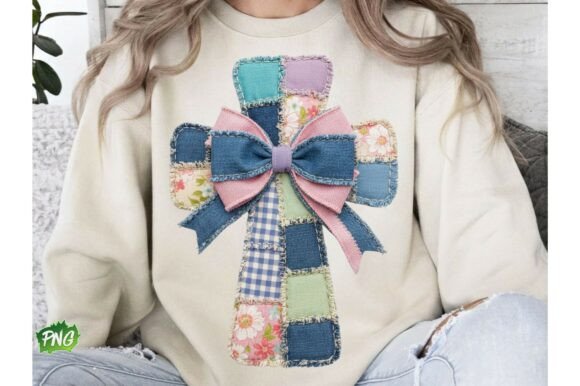
Patchwork Cross PNG, Easter Christian
A Quiet, Warm First Impression—Not Too Sweet, Not Too Solemn
When I opened Patchwork Cross PNG, Easter Christian for the first time, what struck me wasn’t flashiness—it was cohesion. The cross is composed of soft-edged fabric-like segments, each subtly textured like vintage cotton or linen, arranged in a gentle asymmetry that feels handmade rather than digitally rigid. There’s no heavy outlining, no aggressive contrast, and no scripty “Happy Easter” banner crowding the composition. Instead, it breathes. It invites quiet reflection—not performance. That makes it unusually versatile for T-Shirt Designs, especially when you’re stitching for real people: parents ordering baby onesies, boutique owners curating Easter-themed kitchen towels, or craft fairs selling embroidered aprons with understated faith motifs.
How It Lives on Real Fabric—Not Just Screens
I tested Patchwork Cross PNG, Easter Christian on a medium-weight cotton tote bag—unlined, slightly textured—and then again on a lightweight sweatshirt fleece. On the tote, the design held its shape beautifully: the patchwork illusion translated well into satin stitch segments, with just enough fill stitch variation to suggest depth without overwhelming density. Customers browsing at a spring market wouldn’t see “embroidery”—they’d see *craft*. On the sweatshirt, though, I slowed down. The stretch in the knit demanded a light cutaway stabilizer and slightly reduced stitch speed. Even then, the outer edges stayed crisp, and the subtle grain-like texture in the cross arms read clearly—no blurring, no thread piling.
This isn’t a design that shouts. It’s one that settles in. That means it works exceptionally well for items meant to be lived with: baby embroidery on a gauzy swaddle, holiday embroidery on a tea towel that’ll be washed weekly, or personalized gifts like pillow covers for a new nursery. It also holds up in commercial embroidery—think small shop merchandise where brand consistency matters. A single cross on a charcoal apron says “thoughtful,” not “trend-chasing.”
Where Caution Makes All the Difference
Patchwork Cross PNG, Easter Christian doesn’t love tight spaces. I tried it in a 3" hoop on a curved cap front—and while technically possible, the lower corners lost some of their gentle definition. The segmented nature relies on breathing room; compress it too much, and the patchwork effect flattens into generic geometry. Similarly, on very thin fabrics (like lightweight rayon or sheer linen), the fill stitch density may show through unless backed with tear-away stabilizer and tested first.
Dark fabric? Yes—but choose thread colors deliberately. A warm ecru or oatmeal thread gives more dimension than stark white, which can look clinical against navy or charcoal. And on highly textured fabrics—burlap, looped terry, or heavily brushed fleece—I recommend treating it as an applique design instead of relying solely on satin and fill stitches. Let the fabric texture do some of the work, and use running stitch outlines to anchor the shape.
What It Adds to Your Finished Product—Beyond Stitching
There’s a quiet professionalism in Patchwork Cross PNG, Easter Christian. It doesn’t lean on cliché, so it avoids dating quickly. That builds customer trust—especially for Etsy sellers or handmade shops where buyers are choosing intention over impulse. When someone orders a custom embroidered sweatshirt with this design, they’re not buying decoration. They’re buying resonance.
It elevates giftability, too. I stitched it onto a set of organic cotton kitchen towels for a friend’s Easter brunch—no extra text, no borders—and guests kept asking where she’d found “something so peaceful.” That kind of reaction speaks to visual appeal *and* emotional clarity. For creative entrepreneurs building a cohesive line—say, Easter-themed nursery decor or seasonal boutique branding—this design anchors a collection without dominating it.
Practical Notes Every Embroidery Designer Should Run Through
- Always test on scrap fabric first—especially if using textured, stretchy, or dark materials. The mood shifts dramatically depending on thread choice and stabilizer.
- Check thread color contrast early. This design thrives on tonal harmony, not high-contrast pop. Try matte cottons in cream, sage, or dusty rose before defaulting to bright white.
- Review stitch density. It’s moderate—not sparse, not dense—but confirm it aligns with your machine’s tolerance and your fabric’s weight.
- Confirm hoop size compatibility. While it scales well, avoid shrinking below 4" for best segment definition.
- Inspect small details: the seam lines between “fabric patches” are delicate but legible at standard sizes. Don’t push them smaller than 0.7mm in width.
- Test black-and-white mockups—this design relies on texture and shape, not color, so grayscale previews reveal how well it’ll read on varied backgrounds.
- Compare light vs. dark fabric backgrounds in your digital embroidery file previewer. What reads softly on ivory may vanish on black without slight stitch adjustments.
- Use proper stabilizer: medium-weight cutaway for knits, tear-away for stable wovens, and optional topping for napped fabrics.
- Verify licensing before using in client work, wholesale products, or digital resale. If you plan to sell finished embroidered items or bundle it into design assets, confirm commercial use rights upfront.
Final Thought: A Design That Serves the Maker—and the Wearer
Patchwork Cross PNG, Easter Christian isn’t built for virality. It’s built for longevity—in your embroidery project queue, in your small shop inventory, and on the shoulders, bags, and nurseries of people who value meaning over mass. It fits naturally into custom apparel, holiday embroidery, baby embroidery, and thoughtful handmade product lines. Whether you’re an Etsy seller updating your Easter collection or a church boutique owner sourcing dignified, non-clichéd design assets, this one earns its place—not because it’s flashy, but because it stitches true.