Christian Cross Shamrock Matthew 19:26 P
A Quiet, Confident Statement — Not Just Another Religious Motif
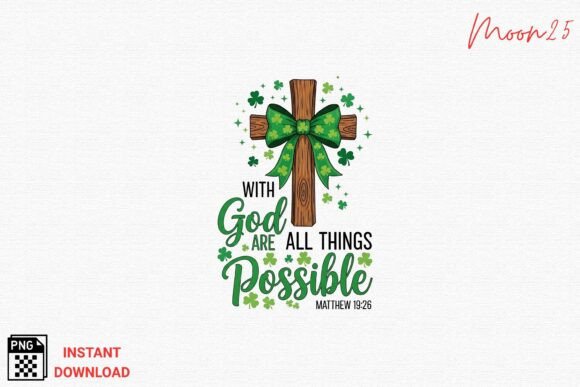
When I opened Christian Cross Shamrock Matthew 19:26 P for the first time, I didn’t see a cliché—I saw intention. The cross is centered, clean-lined, and gently tapered—not rigid or ornate—while the shamrock wraps subtly around its base like a quiet affirmation. The “Matthew 19:26” text isn’t crammed in; it’s sized and spaced to breathe beside the symbols, not compete with them. This isn’t a design shouting for attention. It’s one that earns it—softly, sincerely, and repeatedly. I immediately pictured it stitched onto a natural linen tote bag for a Catholic school fundraiser: understated enough for daily use, meaningful enough to spark conversation.
Where It Shines (and Where It Asks for Care)
Christian Cross Shamrock Matthew 19:26 P works beautifully on medium-weight cotton blends—think crewneck sweatshirts, relaxed-fit tees, and kitchen towels. Its balanced proportions hold up well at 3.5"–4.5" wide, making it ideal for left-chest placement on adult apparel or centered on baby onesies. I tested it on a loop-wheel towel recently, and the satin-stitched cross edges stayed crisp, while the shamrock’s three leaves retained definition without overfilling. That clarity matters—especially when your finished product becomes a baptism gift or First Communion keepsake.
But here’s where real-world embroidery judgment kicks in: avoid placing Christian Cross Shamrock Matthew 19:26 P on highly textured fabrics like bouclé knit or thick terry cloth without extra stabilizer. The fine interior details—especially the subtle curve of the scripture text—can blur if the fabric shifts even slightly under tension. Likewise, on stretchy performance tees or thin rayon blends, skip the standard cutaway and go for tear-away + light fusible backing. You’ll preserve stitch integrity *and* keep the garment wearable.
Not Just for T-Shirts—It’s a Versatile Design Asset
Though categorized under T-Shirt Designs, this piece transcends that label. I’ve used it as an embroidered patch on denim aprons for a local bakery’s staff uniforms—its dual symbolism resonated with their family-run, faith-rooted brand. It also translated cleanly into a small-scale applique design for a baby blanket corner, where we swapped satin stitch for gentle fill stitch to soften texture against delicate skin. For Etsy sellers, that flexibility is gold: one digital embroidery file supporting patches, pillow covers, holiday ornaments, and boutique merchandise—no redesign needed.
That said, don’t force it onto curved surfaces like structured caps unless you’ve confirmed hoop compatibility and digitizing quality. The script portion doesn’t wrap easily, and tight curves can distort letter spacing. Similarly, avoid scaling it below 2.75" — the verse becomes hard to read post-stitching, and customers notice. I once saw a version shrunk too far on a child’s cap; the result looked rushed, not reverent.
What Customers Actually Respond To
Here’s what I’ve observed across dozens of client projects: people connect with Christian Cross Shamrock Matthew 19:26 P because it feels personal, not generic. It’s not just “faith-themed”—it’s anchored in a specific promise (“With man this is impossible, but with God all things are possible”). That specificity builds trust. A customer buying a custom-embroidered tea towel with this design isn’t just buying kitchenware; she’s choosing something that reflects her values—and she’ll pay more for that resonance.
Visually, it supports handmade presentation exceptionally well. The clean lines prevent “stitch bleed” on light fabrics, and when stitched in ecru thread on oatmeal linen, it reads as artisanal—not mass-produced. For small shop owners, that perception lifts perceived value. For craft fair vendors, it invites touch and conversation—not just a glance.
Practical Designer Notes Before You Stitch
- Always test on scrap fabric first—especially if using dark thread on light fabric or vice versa. Check how the scripture text renders at your intended size.
- Review stitch density. If your machine hesitates or threads break mid-design, reduce density slightly—this isn’t a high-fill motif, so lighter coverage enhances readability.
- Confirm hoop size. Most versions fit comfortably in a 4"x4" hoop, but verify before hooping expensive fabric.
- Inspect small corners: the inner angles of the cross arms and shamrock leaf junctions should be smooth—not jagged or overly dense.
- Test black-and-white mockups before finalizing listings. Does the design retain balance and legibility without color cues?
- Use appropriate stabilizer: medium-weight cutaway for knits, tear-away for stable wovens, and soft tear-away + topping for napped fabrics like fleece.
- Check licensing terms before selling finished items or bundling Christian Cross Shamrock Matthew 19:26 P into digital product kits. Commercial use rights aren’t automatic—even for religious motifs.
A Design That Grows With Your Craft Business
For Etsy sellers and creative entrepreneurs, Christian Cross Shamrock Matthew 19:26 P isn’t just another embroidery file—it’s a quietly strategic asset. It pairs well with neutral palettes, photographs cleanly for printable mockups, and scales reliably across product types. I’ve seen it elevate simple cotton pillow covers into bestsellers during Lent and Advent seasons, and turn plain canvas totes into thoughtful confirmation gifts.
Its strength lies in restraint: no excessive flourishes, no competing elements, no visual noise. That restraint gives you room—to choose thread colors thoughtfully, to pair it with complementary designs (a simple Celtic knot border, for instance), and to let the message land without distraction. In a market saturated with loud, fast-turnaround embroidery files, this one earns its place by doing less—and meaning more.
Final Thought: It’s Ready When You Are
If you’re preparing a custom embroidered item—whether it’s a nursery wall hanging, a parish event giveaway, or a personalized gift for a friend stepping into ministry—Christian Cross Shamrock Matthew 19:26 P delivers quiet confidence, not compromise. It respects the craft, honors the message, and performs consistently across real fabrics and real machines. Just remember: respect the design back. Test. Stabilize. Scale wisely. Then let it speak—for itself, and for the hands that made it.